Father Sues Tencent, HoYoverse, and Other Game Giants Over Son’s Addiction But Seeks Just $1.50, Aiming for Industry-Wide Reform
By Daniel Laguna onA Chinese father has filed lawsuits against several of the country’s most prominent game studios.

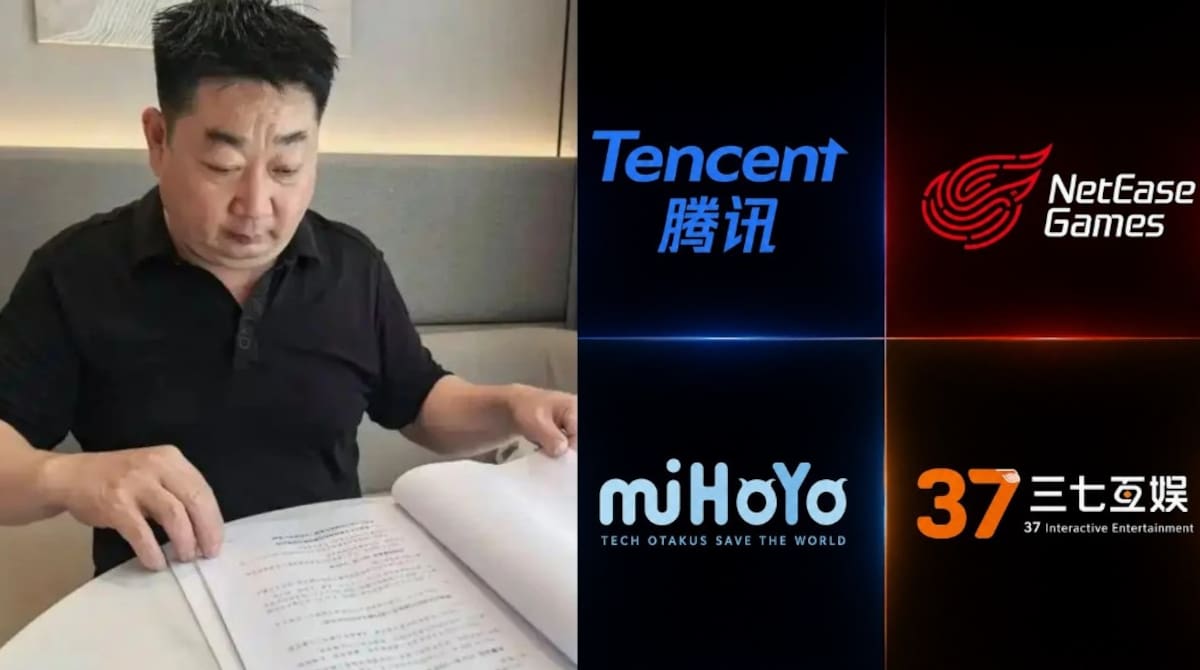
A Chinese father has launched a legal battle against several of the country’s largest video game companies, including Tencent, NetEase, HoYoverse, and 37 Interactive following his teenage son’s severe addiction to online games, which led to serious health complications and a hospital admission.
In case you don’t know, China enforces strict regulations on minors’ gaming time. Armed with these rules, the father, identified only by his surname, Qin, filed suit against the entertainment heavyweights but is only demanding ¥10 CNY, roughly equivalent to $1.50 USD for damages.
While such cases typically involve astronomical compensation claims, Qin’s demand actually aims to accomplish something more ambitious: change China’s videogame industry forever.
Father Sues Tencent, NetEase, HoYoverse, and 37 Interactive Over Son’s Videogame Addiction
The ordeal began when Qin gave his 17-year-old son a mobile phone to stay in touch while he traveled for work. Under current rules, minors are permitted to play only between 8:00 and 9:00 PM on weekends and holidays. However, over several months, the boy accumulated 1,868 hours of gameplay on a single platform, far exceeding the statutory two-hour daily limit.
The situation escalated when he began experiencing recurring health issues. One night, he ingested 18 fever-reducing pills, collapsed at home, and required emergency hospitalization, from which he recovered only after several days.
Shortly thereafter, Qin filed suit in the Tanghe District Court of Henan Province, arguing that his son’s excessive gaming sessions had induced dizziness, guilt, and psychological distress, which ultimately drove him to overdose. The father contends that the studios failed to genuinely verify user ages, despite possessing advanced tools such as facial recognition technology, and thus neglected their duty to enforce existing safeguards.
Following that incident, Qin brought his case before a court in Tanghe, Henan Province. He argues that his son’s excessive gaming sessions triggered dizziness and overwhelming guilt, which ultimately drove him to take the dangerous overdose.
The Real Goal Behind the Lawsuit Against China’s Major Game Studios
In his legal filing, Qin acknowledged that his son’s videogame addiction had progressively upended his lifestyle: weekends were spent confined to bed playing titles from the accused companies, leading to weight gain and disrupted sleep patterns.
Rather than pursuing financial gain, Qin seeks systemic reform. His primary demand is for regulatory bodies make studios follow strong child-protection protocols that prevent future cases of addiction.
“I hope the court will compel these companies to fully assume their responsibilities in curbing youth addiction,” Qin stated. “I also ask that the trial be open to the public, to shed light on the sector’s supervisory shortcomings. I will do everything in my power to defend my son’s rights. Video games have had a profoundly destructive effect on this generation of children. If I fail to stand up for my son, I would not deserve to be called a father.”
For more news on the videogame and entertainment industries, click here.
About the author

Recommended For You
 News
NewsPlayStation Plus Replaces One of Its October 2026 Free Games With a Title Rated 38 on Metacritic, and Subscribers Aren’t Happy
 News
NewsHalo Could Get a Full Reboot, and Activision’s Next Game May Explore Master Chief’s Origins
 News
NewsConsoles Could Get More Expensive Again in 2027 as Memory Maker Warns of ‘Much Higher Prices’ Amid RAM Shortage
 News
News
Comentarios
Inicia sesión desde el menú superior para dejar un comentario.
Sé el primero en comentar.