PlayStation 6 Reportedly Drops Liquid Metal in Favor of New Cooling System to Avoid PS5’s Most Contentious Issue
By Daniel Laguna onA recently surfaced patent offers a glimpse into Sony’s potential next-gen cooling solution.

Sony has remained tight-lipped about the PlayStation 6, but a new patent filing may have inadvertently shed light on a critical aspect of the upcoming console. The document outlines an alternative cooling architecture that the company could integrate into its future hardware.
In its push to innovate within the console space, Sony adopted liquid metal for the PlayStation 5. Yet what was meant to be a cutting-edge advantage quickly became one of the generation’s most controversial talking points, and it appears the company is determined not to repeat that misstep with the PlayStation 6.
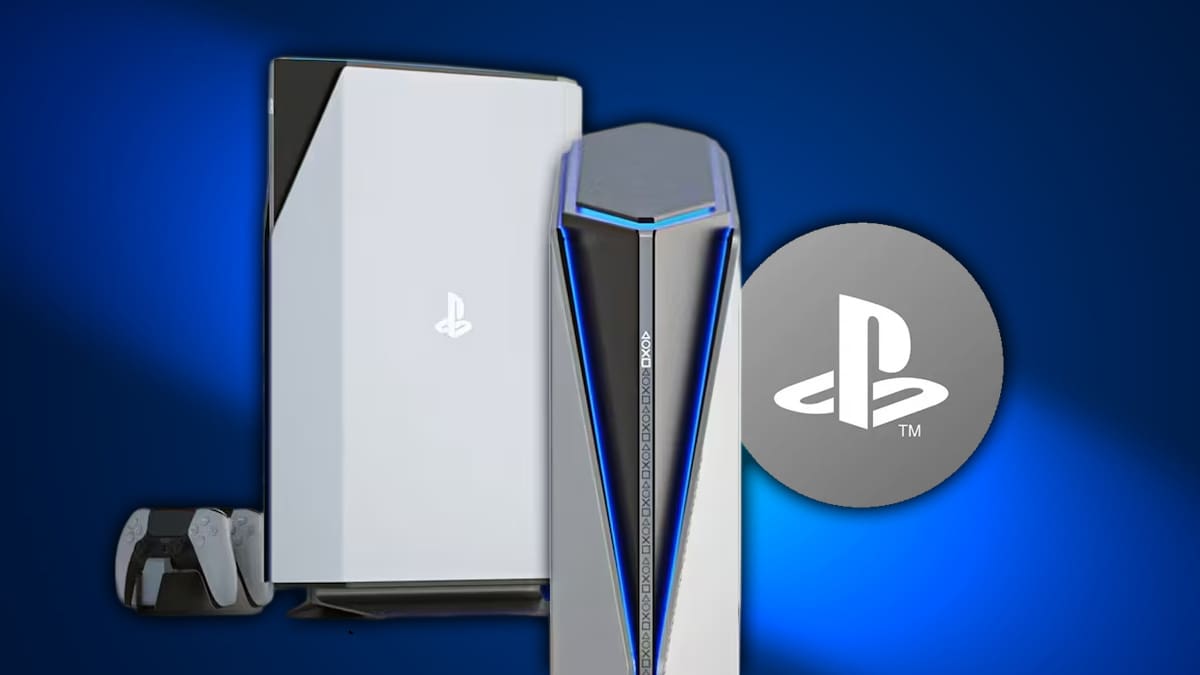
PlayStation 6 to Abandon Use of Liquid Metal
The PS5’s cooling system is undeniably effective, largely thanks to liquid metal’s ability to conduct heat far more efficiently than conventional thermal paste. However, that same component proved problematic for both users and repair technicians, as it was found to pose risks when displaced, unevenly distributed, or leaked onto surrounding circuitry.
The issue ignited heated discussions several years ago, with many advising horizontal placement to minimize risk, while technicians warned that any shift in the material could compromise processor coverage and lead to overheating. Sony itself responded by introducing minor cooling revisions with the PS5 Pro, explicitly aimed at reducing the likelihood of liquid-metal-related failures.
Now, fresh patent documentation suggests that Sony is prepared to move beyond liquid metal entirely for the PlayStation 6. The filing describes a newly developed cooling mechanism that would replace the controversial substance, a change that will likely be welcomed by the community especially those who encountered hardware issues tied to the original design.
Evidence from numerous cases indicated that the liquid metal could migrate over time, leaving portions of the processor inadequately protected and diminishing heat transfer to the heatsink.
In less severe instances, this resulted in sporadic overheating and unexpected shutdowns; in worse scenarios, the conductive material seeped beyond its designated area, coming into contact with the mainboard and causing shorts, corrosion, and irreversible damage.

What Will PlayStation 6’s New Cooling System Be Like?
The patent points to a vaporization-based system, which relies on a sealed network of tubes containing a small volume of fluid, most likely water. As the system heats up, the liquid transforms into vapor, carrying thermal energy toward a cooler section of the loop, where it condenses and repeats the cycle. A fan then exhausts the accumulated heat outside the console enclosure.
Beyond maintaining stable operating temperatures, this approach could offer manufacturing advantages. The vapor-chamber design is inherently less prone to assembly errors compared to liquid-metal application.
Of course, a patent filing is not a definitive confirmation that the PlayStation 6 will adopt this particular solution. Nonetheless, industry observers widely expect Sony to steer clear of liquid metal in its next flagship console.
For more news on PlayStation, click here.
About the author

Recommended For You
 News
NewsNintendo Will Celebrate The Legend of Zelda’s 40th Anniversary with a LEGO Set Inspired by Link and New Ocarina of Time amiibos
 News
NewsUbisoft and Square Enix May Not Support Xbox Disc to Digital, Players Discover
 News
NewsNintendo Switch 2 Will Get a The Legend of Zelda: Ocarina of Time Remake Edition, but It Won’t Include the Game
 News
News
Comentarios
Inicia sesión desde el menú superior para dejar un comentario.
Sé el primero en comentar.