Xbox Disc to Digital: Solution or Placebo?
By Víctor Rosas onMicrosoft has found a very interesting middle ground as the physical format declines
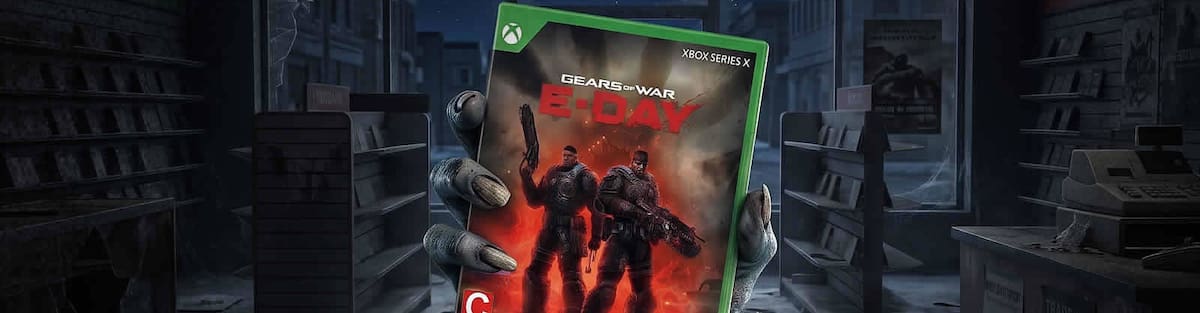
While the gaming world is burning over Sony and PlayStation’s plans to move away from physical games, Microsoft and Xbox want to prove that things aren’t simply black and white. There are shades of gray in the gaming industry, and the American company believes there could be a middle ground that satisfies players who prefer physical games because they provide a backup and a degree of permanence for the products they paid for. Xbox’s rumored Disc to Digital program is now a reality, and here’s everything you need to know about it.
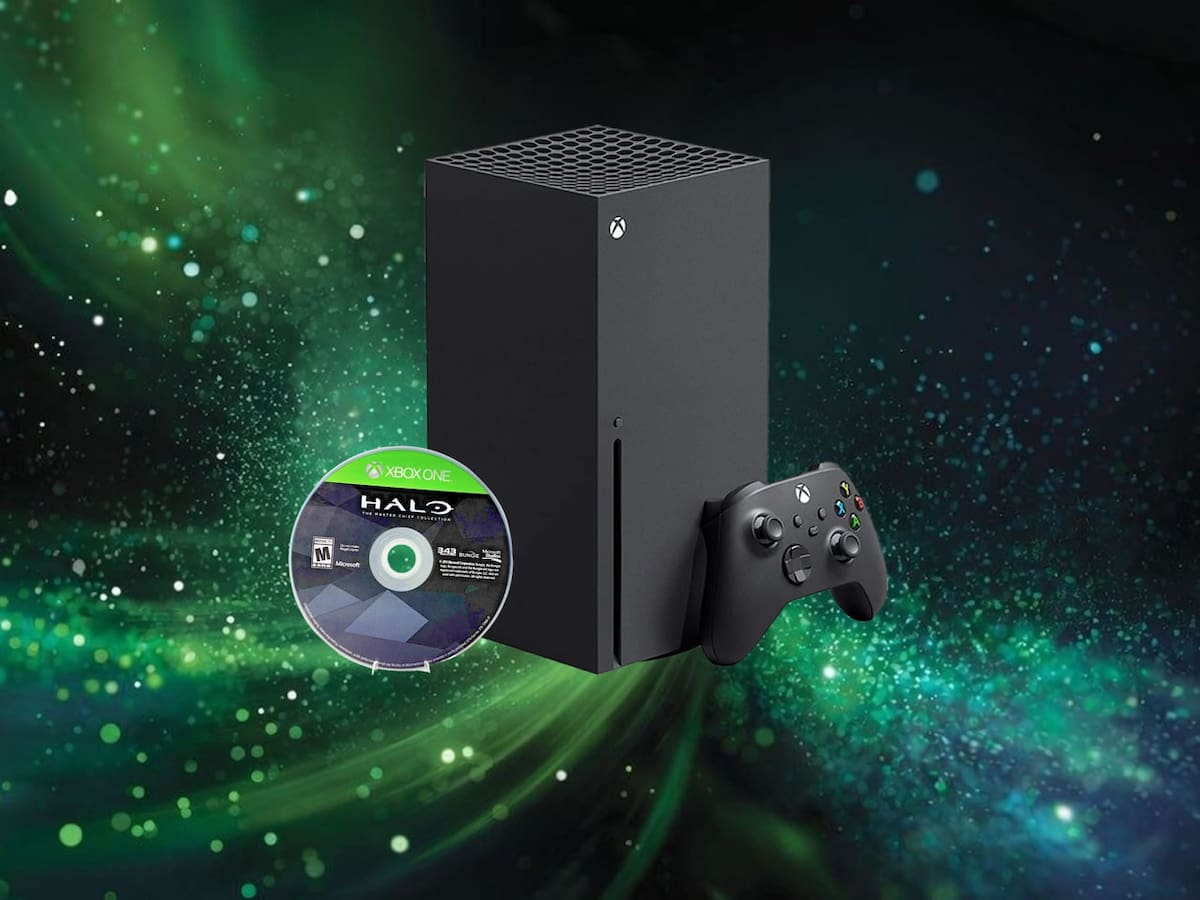
What Is Xbox Disc to Digital?
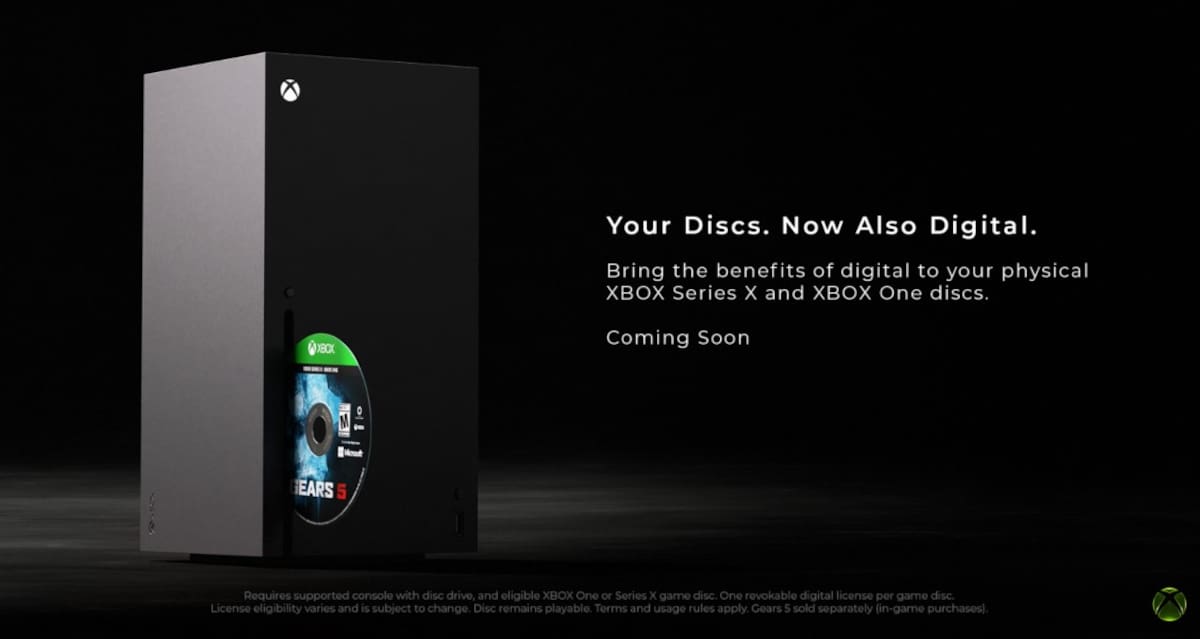
On August 26, Jason Ronald, Xbox’s vice president of next-generation development, officially announced the Disc to Digital program. The initiative gives users who own a physical copy of a game for Microsoft’s recent consoles access to a digital license for that title.
The program will enter its testing phase on August 31 and will initially be available only to members of the Xbox Insider program.
So, how does it work? Based on the official information available so far—and before Microsoft provides additional details and specifications—the process sounds fairly straightforward. You need to own the physical copy of an Xbox One or Xbox Series X game. Once you insert the disc into your console, the system will link that copy to your user account and grant you access—not ownership or possession—to a digital copy.
That also means you can take advantage of features such as Play Anywhere and Cloud Gaming, provided they are supported by the specific game.
The biggest benefit is obvious: after registering the disc, you can put the physical copy back in its case and access the digital version on any compatible console or device linked to your account. From a user-experience perspective, that’s a significant improvement. Owning a physical copy would effectively grant you access to its digital license at no additional cost and without requiring a Game Pass subscription.
According to Microsoft’s announcement, most Xbox One and Xbox Series X games are included in the Disc to Digital program, although, as always, there are exceptions.
There is one important limitation. The program only applies to Xbox One and Xbox Series X physical copies. Games from the original Xbox and Xbox 360 are not included, meaning you can still play them through backward compatibility, but you won’t receive a digital copy through Disc to Digital.
Microsoft hasn’t fully explained how the program will work or what its limitations will be, so previous reports from reliable sources are worth considering. Those reports indicate that the digital license may not be permanent and that you could lose access if the physical game is linked to another user’s account.
Let’s imagine, for example, that you own a physical copy of Gears of War: E-Day. Because of that disc, you receive access to the digital license and can use it across the Xbox ecosystem. If you eventually sell the game, lend it to someone, or lose the disc and another user links it to their account, you would reportedly lose access to your digital license. The new user would then receive access to the digital copy instead.
Keep in mind that this is only an example based on reports from relevant sources. Xbox still needs to explain exactly how the program will operate, including what happens in every possible scenario.
Xbox Disc to Digital: Solution or Placebo?
Considering how aggressively the industry has been pushing toward digital gaming in recent years—and how determined some companies appear to be to leave physical media behind—it’s impossible to evaluate Disc to Digital without looking at the context, the fine print, and everything surrounding the program.
The fine print in Microsoft’s announcement makes one thing clear: users receive access to a digital license for each physical disc, meaning only one player can have access through each copy. The company also warns that eligibility may vary, is subject to terms and conditions, and can change at any time.
That distinction matters. No matter how much money and influence Microsoft and Xbox have, there are legal and business limitations within the video game industry that they have to respect. Remember FPS Boost? Microsoft’s incredible technology improved the frame rates of Xbox 360 and Xbox One games, with the company’s engineering team doing the work required to make it happen.
Eventually, that initiative came to a halt after it became clear that modifying a game’s code required permission, leaving the final decision in the hands of publishers.
Not every publisher is CD Projekt RED, which has generously upgraded The Witcher 3: Wild Hunt at no additional cost while also giving players its two expansions. Each publisher, as the owner of its game, decides what happens to it. That’s where Xbox can run into a wall.
The same issue raises questions about how Microsoft will handle the economics of Disc to Digital. From a publisher’s perspective, it’s obviously preferable for a player to purchase both a physical and a digital copy rather than getting access to one simply because they own the other.
That’s ultimately the point: Xbox’s intention is great and the idea looks very appealing, but this isn’t the first time Microsoft has announced something with fireworks and enormous expectations only for the final product to fall short of its full potential because of factors outside the company’s control.
Hopefully, Microsoft’s claim that most Xbox One and Xbox Series X games will be covered by Disc to Digital remains true for a long time.
There’s also an old saying that the road to hell is paved with good intentions. Disc to Digital feels like a reasonable middle ground and could provide some relief as the physical game market faces an increasingly uncertain future. However, it isn’t something that will fundamentally change the industry in the medium or long term.
Recent days have also brought another reason to pay close attention. Microsoft began sending emails informing users about updates to its Microsoft Services Agreement, making certain terms clearer. It’s the same agreement you click through when all you want to do is play a game or use one of the company’s products—and one that very few people actually take the time to read.
This time, Microsoft gets straight to the point: “software is licensed, not sold.” In other words, as we’ve been saying for years, you don’t have ownership or possession rights over the digital copy you paid for, whether it cost you $70 or $100.
Just as PlayStation has reminded players in recent days, and as virtually every major company does—with GOG being one of the notable exceptions—Xbox is reminding users that digital games aren’t technically theirs. The software belongs to Microsoft or third parties, and those companies reserve the right to determine what happens to it.
That includes the potential loss of access to a license. It’s something players should consider carefully, especially as the industry moves toward giving companies increasingly greater control over the digital experience.
The situation isn’t necessarily dramatic today, but it’s not difficult to imagine a future where access to a digital game you paid for disappears because an agreement between companies expires and nobody decides to renew it. Then there’s the unpredictable possibility of having your entire account banned.
We’re not trying to assume the worst. We know you behave yourself. Still, a recent case involving a Microsoft and Xbox user is worth remembering. The player had to make a major fuss on social media to recover an account containing their information, multimedia content, and digital game collection.
In that particular case, the account had been hacked, and Microsoft’s questionable customer-support systems failed to resolve the problem immediately. What followed, however, was a wave of complaints from other users who said their accounts had been penalized because of content or activity that Microsoft’s AI systems detected as violations of its terms and conditions.
Sony says it outright: “the games aren’t yours.” Microsoft wraps the same message in cotton candy, but ultimately, it’s the same thing.
Is This a Dignified Death for Physical Games?
So far, everything points toward Project Helix launching without a disc drive. According to reports, it’s also increasingly likely that Xbox will eventually say goodbye to physical games, particularly because of the cost involved in including disc drives in hardware at a time when the prices of components needed to manufacture consoles continue to rise.
PlayStation has already set its execution date for 2028, while Xbox appears to be taking a more pragmatic and realistic approach to the transition. Physical game copies aren’t going to disappear overnight. Instead, we’re likely heading into a period lasting several years in which things will continue much as they do today.
Games will still receive physical releases. You’ll still be able to buy them online or walk into a retail or department store and pick up a copy. Sony has reportedly asked publishers to place their physical-game orders ahead of the 2028 deadline, while Xbox appears to be trying to take advantage of this transitional period through a program such as Disc to Digital.
There’s another important problem, though: how easy will it actually be to find physical Xbox games?
We have no doubt that there will be increased interest in owning physical Xbox games, particularly if Disc to Digital makes those copies more valuable. But will those games actually be easy to find?
The latest sales report from Circana revealed that, so far in 2026, Xbox represents just 4% of all physical game sales in the United States.
The broader picture is even more concerning. The physical game market recently experienced its worst month since 1995, and physical sales continue to collapse. That doesn’t necessarily mean stores are overflowing with unsold copies gathering dust on shelves.
Instead, the number of physical copies being shipped to retailers continues to decline. For less popular games, finding a physical copy can already feel like an adventure. There are simply fewer copies on the market, and availability is shrinking considerably.
Unless we’re talking about a major AAA release backed by an enormous marketing campaign, players increasingly have to hunt down the physical game they want before it disappears from stores.
Maybe that’s a pessimistic way of looking at things. But if trust is good, not trusting blindly is better. The industry has already shown us time and again that players aren’t always its top priority.
Xbox and Its Endless Effort to Keep Players Happy
At this particular moment, Disc to Digital feels like the right middle ground, even if it doesn’t provide the radical solution demanded by movements such as Stop Killing Games. The fundamental issue remains one of licenses that players can use but don’t actually own, alongside an era in which the version 1.0 printed on a disc can sometimes be surprisingly valuable precisely because it exists without later updates or additional content.
Still, Xbox deserves credit for taking a different route. Rather than simply pushing players toward an entirely digital future, Microsoft is attempting to create a new form of value and recognition for the millions of people who still prefer physical games.
Of course, our ideal scenario would be for every company to follow GOG’s philosophy, with players having stronger control over their games and preservation guaranteed from the user’s side as well. But given the increasingly uncertain direction of the gaming industry, Xbox’s decision is a small beacon showing a willingness to provide players with options and alternatives.
And if there’s one thing Xbox has historically been good at, it’s finding ways to make its users feel valued.
What do you think about Xbox Disc to Digital? Will you rush out to buy as many physical Xbox games as possible? Do you think speculation will drive up the prices of Xbox physical copies because of the program?
Let us know in the comments and keep following us here at LEVEL UP.
About the author

Recommended For You
 Originals
PlayStation Will Kill Physical Games Before the Industry Solves a Problem That Will Affect Us All
 Originals
“The Pressure Is Enormous”: We Spoke With Naoki Hamaguchi About Final Fantasy VII Revelation and the Challenge of Reinventing a Legend
 Originals
Star Fox Doesn’t Hide the Original’s Cracks; It Turns Them Into Its Greatest Strength
 Originals
Comentarios
Inicia sesión desde el menú superior para dejar un comentario.
Sé el primero en comentar.