Microsoft Considers Rewarding Gamers for Lending Idle GPU Power to Train AI
By Víctor Rosas onThe company is looking for solutions that do not depend entirely on data centers and market limitations.

WHAT YOU NEED TO KNOW
- Microsoft is exploring a system to tap into the idle processing power of gamers’ graphics cards (GPUs) to train AI models, offering rewards in return.
- The strategy aims to ease reliance on traditional data centers by crowdsourcing spare capacity from consumer hardware.
- Built-in safeguards would automatically pause AI workloads if a device overheats or launches a resource-heavy task, ensuring zero impact during use.
Artificial intelligence may be the tech industry’s biggest boom, but it is currently dealing with global shortages of RAM and semiconductors. As such Microsoft is looking into an alternative solution that would recruit everyday PC users and gamers to share the workload in exchange for rewards.
While Microsoft currently holds a leading position in the AI race, maintaining that momentum requires a solution that looks beyond data centers. As a result, the company is turning its attention to millions of consumer gaming setups.
A New Microsoft Patent Details Crowdsourced AI Training
Supply constraints on high-end GPUs and memory have created a bottleneck for every major player in the AI sector. Recently, OpenAI CEO Sam Altman lamented the amount of RAM and GPU power tied up in consumer PCs, suggesting that the hardware would be far better utilized in data centers than sitting underutilized for gaming.
However, according to a U.S. patent published on November 5 (spotted by Wccftech), Microsoft seems to have found a solution to this issue.
Titled " Opportunistic Micro-training on Edge Devices Using Spare GPU Utilization," the patent outlines a system that breaks down heavy AI training workloads into smaller tasks and distributes them across compatible consumer devices. By utilizing only spare GPU and RAM capacity, the system is designed to run silently in the background without degrading the user’s experience.
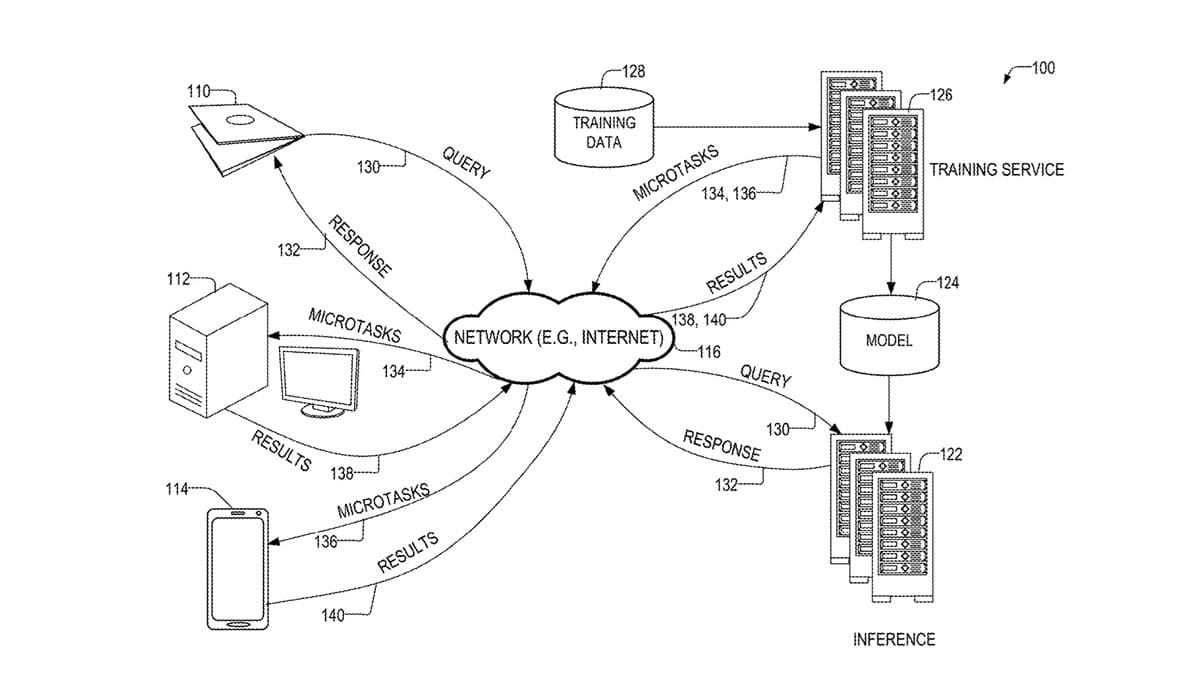
Microsoft Will Reward Players for Joining the Program
According to the filing, this AI training network would be using the GPU of laptops, tablets, and even smartphones.
To prevent the software from ruining a gaming session or damaging hardware, processing would automatically throttle or suspend the moment a device experiences a temperature spike or the user launches a demanding application.
Participation would strictly be opt-in, operating as a mutually beneficial exchange. In return for lending out their hardware, users would receive some form of “compensation.” While the patent stops short of promising direct cash payouts, it explicitly mentions offering “credits” or similar rewards.
For more news on the gaming and entertainment industries, click here.
Stay tuned to LEVEL UP for continuing updates.
About the author

Recommended For You
 News
“Gaming Is Not a Waste of Time”: Logitech Gives Employees the Day Off for GTA VI Launch
 News
10,000 Copies of GTA VI Ultimate Edition Are Being Given Away for PS5 and Xbox Series X|S. Here’s How to Win!
 News
Out of Space for GTA VI on PS5? Corsair and Elgato Launch a 1 TB SSD and 4K Capture Card Bundle
 News
Comentarios
Inicia sesión desde el menú superior para dejar un comentario.
Sé el primero en comentar.