PlayStation, Xbox, and Nintendo Prices Will Keep Increasing, Experts Warn
By Daniel Laguna onExperts believe the video game industry will become even more costly in the years ahead.

The current generation of consoles has been a persistent strain on consumers’ wallets and credit cards. Driven by a memory chip shortage, inflation, and other economic pressures, PlayStation, Nintendo, Xbox, and Valve have all raised the prices of their hardware sometimes multiple times within a single year.
Unfortunately, players may need to accept that gaming is becoming a luxury, as analyst forecasts remain largely pessimistic. Experts recently discussed the growing uncertainty in the industry, largely due to repeated price hikes on hardware.
Representatives from leading analyst firms made it clear that the situation will not improve in the short term, and a return to lower console prices is highly unlikely. On the contrary, gaming systems are expected to become increasingly expensive, leaving consumers to bear the burden.
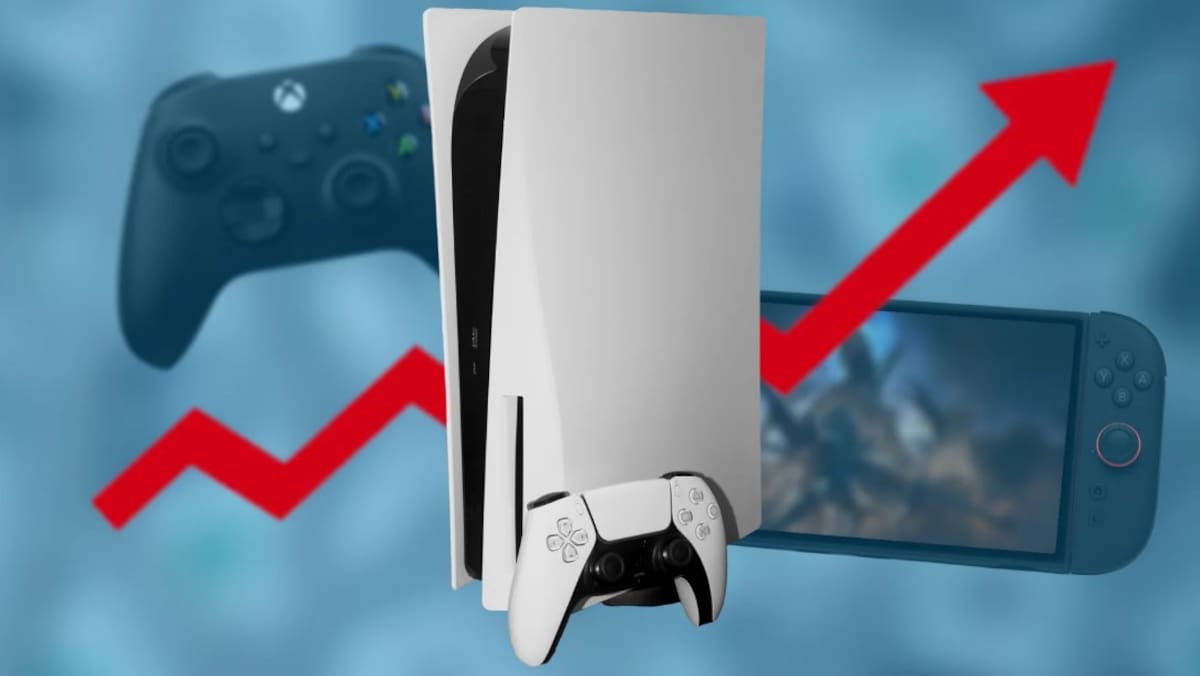
Why Have Consoles and Gaming Become a Luxury?
The memory chip crisis exacerbated by the rapid rise of artificial intelligence is the primary driver behind console price increases. The PS5, Xbox Series X|S, and Steam Deck are now significantly more expensive than at launch and even Nintendo has not escaped this trend. The upcoming Switch 2 is set to see a price hike this September.
Joost van Dreunen, an analyst and professor at New York University’s Stern School of Business, explained that the memory crisis is not the only factor working against consumers. In comments to Kotaku, he noted that U.S. tariffs have also delivered a severe blow, raising costs across the entire technology sector.
“Downstream suppliers and manufacturers now sit on massive amounts of inventory they cannot sell or assemble because few consumers would be willing to pay for the markup. What was supposed to bring manufacturing jobs to the U.S. has instead priced consumers out of the market and pushed manufacturing jobs to lower wage countries,” he explained.
Serkan Toto, CEO of consulting firm Kantan Games, pointed to inflation and ongoing wars as additional factors complicating the long-term outlook. Daniel Ahmad, Director of Research and Analysis at Niko Partners, added that currency fluctuations further contribute to this problem.
All three experts agree that consoles from PlayStation, Xbox, Nintendo, and Valve will continue to rise in price. Some even suggest the Switch 2 could see another increase in 2027, painting a difficult picture for gamers worldwide.
Mat Piscatella, senior director at Circana, succinctly summarized the challenges ahead for video game consumers, citing the continuous rise in hardware, software, and service costs.
“Some very tough choices with long-ranging impact will have to be made by all hardware manufacturers both now and in the coming months when it comes to pricing and production,” he says. “Yes, at some point there is a viable price cap. What that cap is, however, is still a bit of a mystery, and dependent upon numerous factors, both quantifiable and not so much. This market has never before been in this position, and we’re learning many things about it as we go.”
Consoles and Games Won’t Get Cheaper, Analysts Warn
Many consumers hope that console prices will stabilize once the memory crisis fades. Unfortunately, analysts believe hardware prices will not drop. If they do, it likely won’t happen until sometime between 2027 and 2029.
Van Dreunen noted that memory manufacturers have their production committed through at least 2028. However, even the passage of time does not guarantee that systems like the PS5, Xbox Series X|S, or Switch 2 will become more affordable.
He argues that players will have few low-cost options for enjoying video games in the near future. From his perspective, those with limited financial means may be effectively excluded from the industry.
Other experts, such as Ahmad and Piscatella, offer slightly more optimism, believing that options for gaming will always exist. They expect mobile gaming and cloud gaming to gain significant popularity as prices rise.
Tiago Reis, an analyst at Newzoo, described the industry as “entering a period where the pricing floor for gaming hardware is likely higher than it was before.” In his view, console manufacturers have little real incentive to continue subsidizing their hardware, as their growth now relies on content monetization and other revenue streams.
“That doesn’t mean prices can never come down, but a return to earlier pricing expectations looks increasingly unlikely,” he concluded.
For all the latest news related to the video game industry, click here.
About the author

Recommended For You
 News
NewsGrand Theft Auto VI May Already Have a PC Release Window, With Its Steam and Epic Games Store Launch Closer Than Players Expect
 News
NewsAttack on Titan Is Returning in 2027 With a Special Project, More Than 5 Years After Its Controversial Finale
 News
NewsXbox Thought of Everything for Its Disc to Digital Program, and Here’s How to Check Your Digital License History
 News
News
Comentarios
Inicia sesión desde el menú superior para dejar un comentario.
Sé el primero en comentar.